
What to do with our money?
 Adaugă-ne ca sursă preferată
 Urmărește pe Google News
Un client al Mega Image a filmat un gândac într-o locație a retailerului de la Ștefan cel Mare, în zona în care se fac sandwich-urile. Acesta a sesizat nu mai puțin de trei angajați, care i-au spus doar că „se rezolvă” fără a oferi alte amănunte sau a-și cere scuze pentru situație. La solicitarea Capital, reprezentanții Mega Image au fost evazivi. Iată declarația acestora după patru zile de la înștiințare: „În urma verificărilor efectuate, nu am identificat această sesizare în magazin. În același timp, menționăm că în toate magazinele noastre sunt efectuate periodic lucrări de dezinsecție astfel încât să fie asigurate siguranța de funcționare și curațenia spațiilor.” Redăm în cele ce urmează videoclipul.
Through all its history, Romania didn’t excel in creating systems, institutions or mechanisms. The form without substance was, unfortunately, the one that ruled the upgrading of numerous sectors of the Romanian society. After 1990, as we wanted to live the capitalism, we had to learn how to implement its values. One of the important relations in the economy, the one between work, savings and investment, had to be redrawn. The post-communist period brought along new ideas and a new philosophy regarding the savings and the investments.
As we might recall (with amazement, nostalgia and maybe fondness), the Romanian investment behaviour experienced various formulas, some of them original, reflecting the society’s evolution and level of prosperity. After the initial rush towards consumption – a colour TV was the most valuable asset of a relatively well capitalised society, but who rapidly lost its initial reserves -, the need to gain, the famous capitalist greed which acts like one of the main engines of the present day economy, emerged. Various Ponzi schemes were born, Caritas becoming a milestone of the recent Romanian history. The credulity of those hoping to increase their investments by eight times in three months seems now unbelievable, but back then it was very real.
Rushing towards foreign currencies when the inflation began to adjust, somehow naturally, the local economy was another Romanian form of investment. “100 US dollars” were not only hard currency, but also the best investment. The 2000s brought along the hunt for assets and the real estate assets became favourites. The land bought for one euro and sold six months later for two became the new local investment ideal. The trend which was set in 2005-2007 will remain for a long time a standard for an “investment heaven” in these parts of the world.
Nowadays, we lack a unanimously accepted investment model. For a society that believes in getting rich overnight, it’s a big inconvenience. It’s a lack of opportunities which, maintained for a longer period of time, will impel a long-awaited maturity of the Romanian investment behaviour. The idea that a fortune is made rapidly and intensively, even if spectacular, can’t bring in value-added in the long-run. The method of small, but safe steps works and will always work better. Working, saving and investing the capital according to the risk profile and based on some realistic goals is a path rarely followed for the moment in Romania. The concept of personal finances is still much too theoretical. The bank interests maintained for a long period of time at low levels – a situation that started to be familiar in Romania too – or the lack of return from the capital will force people to assume some correct investment policies. This change of economic background will prove to be the corner stone for a new capital market in Romania. Those who own capital will finance viable businesses for better returns. Without undertaking this well calculated and administrated risk, it is going to be harder and harder to obtain more return from one’s money.
Paraphrasing the famous “better late than never”, I believe we are currently witnessing the underlying of a new financial market which will create that sort of investors specific to the middle-class, which are indispensable to the real capitalism.
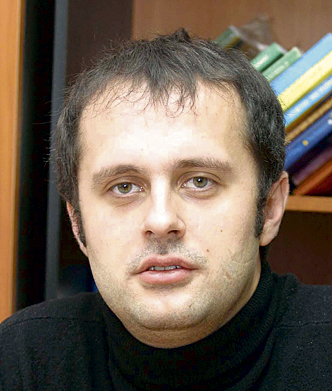
Alin Brendea
Deputy General Manager, Prime Transaction SA
Recomandările noastre


M-am angajat la site-ul capital.ro într-o perioadă în care online-ul aproape că nu exista, iar printul era, încă, la o așa de mare putere încât oamenii de la site erau percepuți, cumva, drept oaia neagră a redacției. Cineva ar putea spune că am fost un om cu viziune, care știa că epoca printului va apune. Ei bine, nu, n-am fost. Nu m-aș fi gândit niciodată că oamenii vor ajunge să citească știrile pe internet în felul în care le citesc astăzi: a apus până și epoca desktopului, iar știrile sunt consumate în proporție de 80% de pe telefon. Mediul ăsta care se numește online are o mare trăsătură: schimbarea, iar dacă tu, cel care lucrezi în mediul online, nu te adaptezi în permanență la schimbare, nu reziști. Altă cale nu e. Pentru mine, site-ul capital.ro reprezintă nu doar un loc de muncă, este însuși mediul în care m-am format ca om și în care am devenit persoana care este astăzi. Pentru mine, capital.ro este un mod de viață...
Informațiile publicate de capital.ro pot fi preluate de alte publicații online doar în limita a 500 de caractere și cu citarea sursei cu link activ. Orice abatere de la această regulă constituie o încălcare a Legii 8/1996 privind dreptul de autor.