
The future of oil royalties in Romania
 Adaugă-ne ca sursă preferată
 Urmărește pe Google News
CHANGES According to the preventive stand-by agreement signed in September 2013 between IMF and Romania, the process of drawing a strategy for a new taxation and royalties system for oil and gas has already begun by establishing an inter-ministerial working group. With technical assistance from IMF, the group should come up with a new regime which will be effective from 2015 until 2024, in case all involved parties will agree on
There were various discussions lately regarding the possibility of increasing the oil royalties paid in Romania, seen as lower than those in force in other European countries, with a direct negative impact over the state’s budget. These talks took place especially as the period of time on which the Romanian state committed itself to maintain a certain level of royalties for OMV Petrom, one of the main Romanian oil and gas producers, expired. According to recent statements from OMV Petrom representative, Mrs. Mariana Gheorghe, in an interview she gave to the Agerpres newswire, the company’s representatives were supposed to talk with the authorities about all taxes in the oil sector, including the level of royalties.
The current legal frame regarding the oil royalties is ruled by the Oil Law (238/2004). According to this document, the owners of the oil licenses who received the permit to extract oil or to operate de pipes in the National Oil Transport System or the state-owned oil terminals should pay the oil royalty.
How is it calculated?
The oil royalty is a segment of the gross production, varying between 3.5% and 13.5% according to the level of the gross production. In other words, the oil royalty is calculated by multiplying the value of the gross extracted production by the percentage level settled by the Oil Law, where the value of the gross extracted production is the product between the gross production and the reference price. According to the Mineral Resources National Agency (ANRM), the average value of the oil royalties is of 7%.
In order to calculate the state revenues from oil royalties, ANRM settles oil reference prices based on a methodology supported by scientific studies. The reference prices are established monthly for the 14 types of oil extracted in Romania. According to a recent statement of the ANRM representatives, the average reference price for the 14 types of oil was 2,045 RON per tone in July 2014.
Taxation types all over the world
There are four types of oil taxation at global level: the royalty system which is widely used in Europe, including Romania; the production sharing system, mostly in the Arabic countries; the less popular system applied by Mexico and Iran, based on service contracts; and the system where the oil fields are managed by state-owned companies or by public-private partnerships.
A comparative analysis of different oil taxation systems indicates that, in those cases where the royalties are used, their level is highly different from country to country and the way this level is settled is directly influenced by a series of factors like the structure of the resources, the production techniques, the production costs and the investment flow. As the statistics indicate, Romania currently has among the smaller royalties in Europe, whether we are considering fixed royalties countries or those with variable royalties according to the size of the deposit.
According to recent studies, Turkey has a 12.5% royalty, in Germany a 10% level is in force, while in Brasil and Russia the 10% and 22% respectively royalties are accompanied by other taxes, which create a profitable fiscal package for the state.
In Hungary the royalties floats between 12% and 30%, while in France the upper level of the royalty is also 30% according to the size of the deposit, which is more than double comparing to the top royalty charged by the Romanian authorities.
A different taxation system
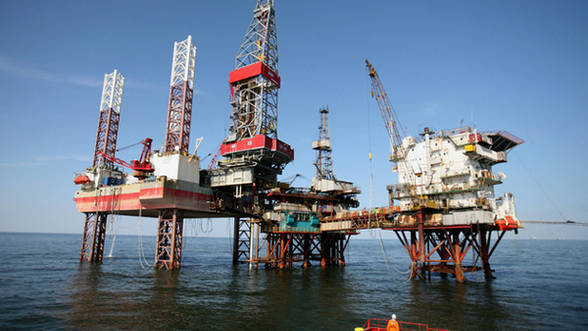
There are currently taking place discussions regarding the introduction of a differenced taxation system, which implies a complex taxation system related to the various sectors of the Romanian mineral resources industry. In a recent statement quoted by the Mediafax newswire, the Romanian Prime Minister Victor Ponta was saying: “It’s obvious, and this is how they do it at European and global level, that you can’t have the same royalties for land resources and for offshore resources -in our case the Black Sea resources- for a simple reason: there are huge differences in terms of investments and profits. Then we should find a differenced system and we are currently working together with World Bank’s experts to create such a system that will keep the offshore fields profitable.”
Ramona Serghiuță, Junior Associate,
POP & PARTNERS Attorneys-at-Law
Recomandările noastre






M-am angajat la site-ul capital.ro într-o perioadă în care online-ul aproape că nu exista, iar printul era, încă, la o așa de mare putere încât oamenii de la site erau percepuți, cumva, drept oaia neagră a redacției. Cineva ar putea spune că am fost un om cu viziune, care știa că epoca printului va apune. Ei bine, nu, n-am fost. Nu m-aș fi gândit niciodată că oamenii vor ajunge să citească știrile pe internet în felul în care le citesc astăzi: a apus până și epoca desktopului, iar știrile sunt consumate în proporție de 80% de pe telefon. Mediul ăsta care se numește online are o mare trăsătură: schimbarea, iar dacă tu, cel care lucrezi în mediul online, nu te adaptezi în permanență la schimbare, nu reziști. Altă cale nu e. Pentru mine, site-ul capital.ro reprezintă nu doar un loc de muncă, este însuși mediul în care m-am format ca om și în care am devenit persoana care este astăzi. Pentru mine, capital.ro este un mod de viață...
Informațiile publicate de capital.ro pot fi preluate de alte publicații online doar în limita a 500 de caractere și cu citarea sursei cu link activ. Orice abatere de la această regulă constituie o încălcare a Legii 8/1996 privind dreptul de autor.